An employee ships the wrong product. Again. A week later customer service misses an important message. Again. Inventory runs out earlier than expected. Again. Advertising spends too aggressively. Again.
Your first instinct is probably the same as every founder’s. Someone made a mistake. Someone needs more training. Someone wasn’t paying attention. Someone should have known better.
Sometimes that’s true. But experienced CEOs eventually start asking a completely different question: what system made this mistake almost inevitable?
People make mistakes. Systems determine how often they happen.
The blame reflex
When something goes wrong, businesses naturally look for a person. Who approved this? Who forgot? Who entered the wrong number? Who missed the deadline?
People are visible. Systems are invisible. That makes blame emotionally satisfying — and improvement surprisingly difficult.
Imagine a warehouse where picking errors happen every day. You replace three employees. The mistakes continue. Were the employees the problem, or did three different people enter the same broken system?
Imagine a factory
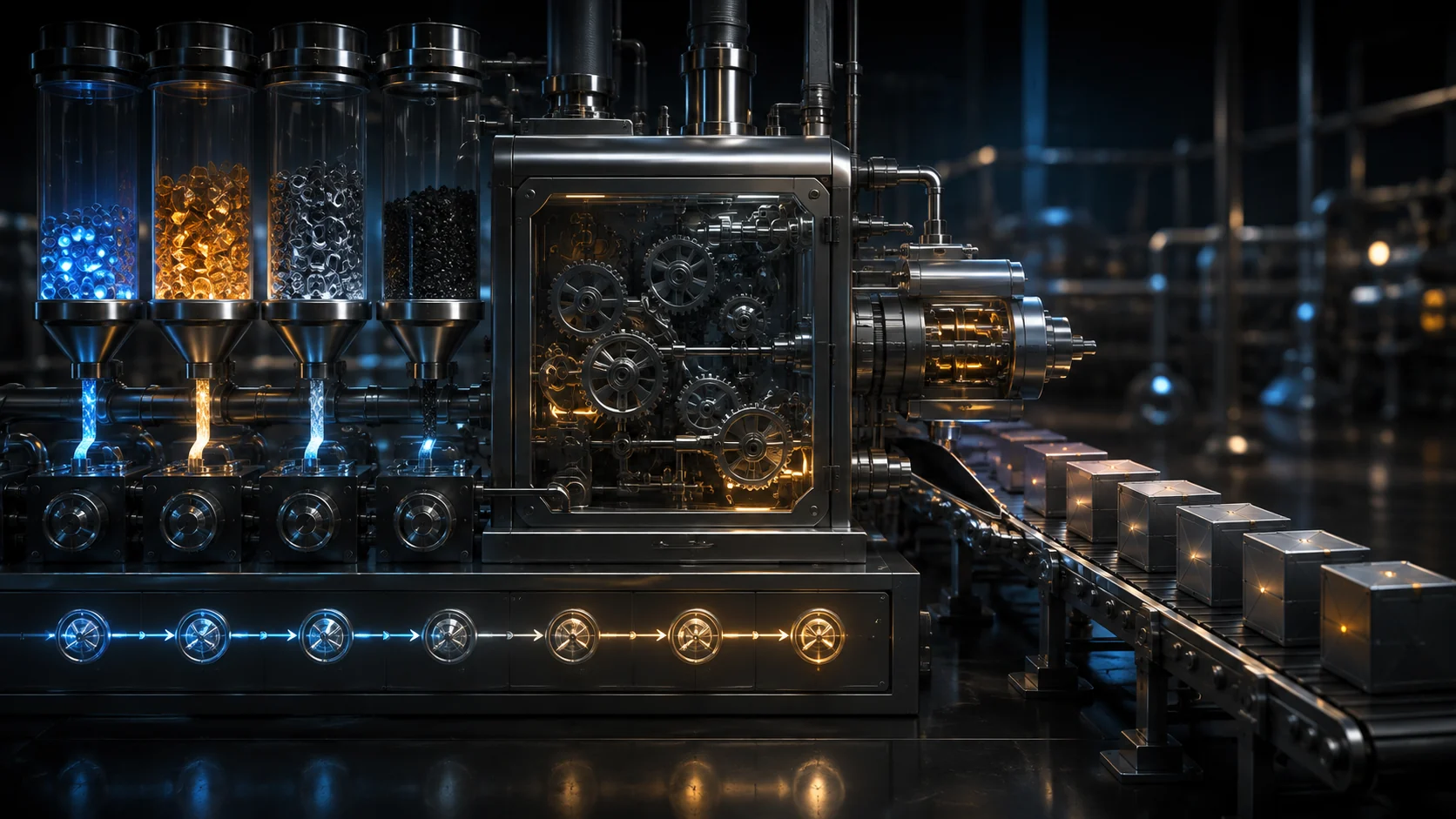
Picture a factory producing thousands of water bottles an hour. Ten percent leave the line with damaged caps. Management becomes frustrated. Workers receive additional training. The next week, ten percent still have damaged caps.
Why? Because the machine producing the bottles never changed. The system was producing exactly what it was designed to produce.
If the system stays the same, the outcomes usually stay the same. Changing people without changing systems rarely changes results.
Every business has perfectly designed outcomes
This sounds ridiculous at first. Surely no founder designed stockouts, late shipments, poor communication or cash flow problems. Of course not.
But businesses aren’t designed by intention. They’re designed by accumulated decisions — every hire, software choice, approval process, spreadsheet, meeting, shortcut and temporary solution. Together they form the operating system of the company.
The outputs you see today are the logical consequence of that operating system. Not intentional. But entirely predictable.
Symptoms are loud. Systems are quiet.
Imagine your PPC team consistently launches campaigns late. Management complains. More meetings are scheduled. Deadlines become stricter. Nothing improves.
Eventually someone discovers the real issue:
- Campaigns cannot launch until product photography is complete
- Photography depends on packaging
- Packaging depends on supplier approvals
- Supplier approvals require the founder
Symptoms appear where the problem becomes visible. The cause often exists somewhere else entirely.
People adapt to systems faster than systems adapt to people
Think about a new employee joining your company. Enthusiastic, organised, highly capable. Six months later they’re using the same spreadsheets, attending the same unnecessary meetings, following the same inefficient processes.
Because organisations shape people remarkably quickly. The system teaches everyone how work is actually done.
Placed inside poor systems, they often produce average results.
Placed inside outstanding systems, they often perform surprisingly well.
Which is why hiring exceptional people doesn’t automatically create an exceptional business.
The founder usually designed the system, not intentionally
This is one of the most uncomfortable moments in leadership: a founder realises many organisational problems originate from decisions they personally made. Not because they were careless — because every business begins as improvisation.
Need a report? Create a spreadsheet. Need inventory visibility? Build another spreadsheet. Need approval? Ask the founder. Need information? Schedule another meeting.
Those solutions work beautifully at the beginning and become permanent architecture years later. The founder didn’t design inefficiency. They simply never redesigned success.
Every shortcut becomes a policy
A supplier misses a shipment. To stop it happening again, someone adds an approval step. Months later another issue appears. Another approval. Another document. Another process.
Eventually nobody remembers why half the procedures exist. Each protective layer seemed reasonable; together they slow everything down.
Organisations rarely become bureaucratic overnight. They become bureaucratic one precaution at a time.
Systems determine behaviour
Suppose sales teams receive bonuses based exclusively on revenue. Predictably, discounting increases, advertising becomes aggressive, inventory pressure grows and margins decline.
Were employees behaving badly, or responding rationally to the incentives the business created?
People optimise for whatever the system rewards. If the outcomes disappoint you, examine the incentives first.
Meetings are often symptoms too
Founders frequently complain about spending all day in meetings. But meetings usually exist because another system failed: poor documentation, unclear responsibilities, uncertain priorities, weak reporting, lack of trust.
The meeting isn’t the problem. It’s compensation for a missing capability. Fix the underlying system and many meetings disappear on their own.
Every recurring problem is a design clue
Imagine keeping a notebook for one month, and writing down every time someone says “this keeps happening.”
- Late inventory
- Pricing errors
- Missing invoices
- Conflicting reports
- Delayed launches
- Repeated customer complaints
Those aren’t isolated incidents. They’re signals. The business is telling you where its design no longer matches its size. Recurring problems are invitations to redesign.
Great leaders become systems designers
Early-stage founders solve problems personally. Growing founders create processes. Exceptional founders redesign systems.
“Who made the mistake?”
“What system made this mistake likely?”
Instead of asking who should own this, they ask why ownership keeps becoming unclear. Instead of solving today’s issue, they eliminate tomorrow’s version of it.
Imagine replacing every employee
A thought experiment. Suppose every employee left tomorrow and you hired an entirely new team. Would the business produce dramatically different results?
For a few weeks, probably. After six months? Maybe not. The same processes, incentives, software, approvals and reporting. Eventually many of the same problems would return — not because the people are the same, but because the system is.
Systems scale. Heroics don’t.
Many successful Amazon businesses survive because extraordinary people constantly compensate for weak systems.
- The operations manager remembers everything
- The founder catches every mistake
- Customer service fixes every issue manually
- Accounting reconciles every discrepancy
The business looks healthy. When those people burn out or leave, everyone discovers they weren’t supporting the system. They were the system.
That’s an incredibly fragile business model, and it usually fails at the worst possible moment — the moment the business grows enough that one person can no longer hold it together.
The dashboard we actually need
Imagine opening your management software each morning and seeing, alongside revenue, advertising, inventory and profit:
- Recurring operational failures
- Manual interventions
- Founder dependencies
- Process completion rates
- Decision bottlenecks
- System reliability
- Number of repeated issues
- Root causes eliminated this month
Suddenly management focuses less on repairing outcomes and more on improving the machine producing them.
Improvement begins with curiosity
The strongest organisations share one habit. When something goes wrong, nobody asks who’s responsible. The first question is why the system allowed it to happen.
That small change transforms culture. People stop hiding mistakes and start exposing them, because every mistake becomes an opportunity to improve the system rather than assign blame. Learning accelerates. Innovation becomes safer. The organisation becomes stronger after every failure instead of merely recovering from it.
Final thoughts
Every business produces exactly the outcomes its systems are capable of producing. That doesn’t mean those outcomes are intentional. It means they’re predictable.
Stockouts, poor communication, founder bottlenecks, slow launches, inventory errors, advertising mistakes — these rarely exist because people don’t care. They exist because the organisation quietly taught people that this is how work gets done.
The companies that dominate the next decade won’t necessarily hire dramatically better people than their competitors. They’ll build dramatically better systems: systems that make good decisions easier, mistakes harder, and that allow ordinary people to produce extraordinary results consistently.
Because people are wonderfully creative, wonderfully imperfect and wonderfully human. Businesses shouldn’t depend on perfection. They should be designed to succeed without it.
Not “how do we build better teams?” but “what kind of organisation naturally produces the results we want?”
Once you answer that, growth becomes far less dependent on individuals and far more dependent on the system they’ve built together. That’s when a business stops being a collection of talented people and becomes an organisation that compounds excellence, one well-designed system at a time.
This completes a trio. Decision quality argues the business is the sum of its decisions; growth versus complexity explains what makes those decisions slow; this one explains why the same mistakes keep returning regardless of who is making them.